


PHCCLS Executive Programme

Programme Overview
This executive programme provides Chinese business professionals with a pragmatic understanding of the Pakistani legal framework governing corporate operations, investment, and dispute resolution. The course is designed to ensure that executives can strategically navigate regulatory requirements, minimize legal risks, and engage effectively with Pakistani legal institutions while conducting business in Pakistan. It provides a practical and structured approach to navigating Pakistan’s business laws, offering insight into both domestic legal provisions and international regulatory obligations affecting Chinese investments.
| Duration | 18 Sessions |
| Start Date | December 8th, 2025 |
| Format | On-campus |
| Location | LUMS |
| Timings | Monday, Tuesday & Wednesday, 6:30 PM - 8:30 PM |
| Who Can Join | Open to all (For executives, investors, project leads, legal/compliance teams, etc.) |
| Age Requirement | 20 & above |
| Course Fee | PKR 170,000 |
Programme Faculty
Gain first-hand knowledge from distinguished faculty and industry practitioners whose expertise spans law, business, and cross-border commerce, bringing real-world insights directly into the classroom.
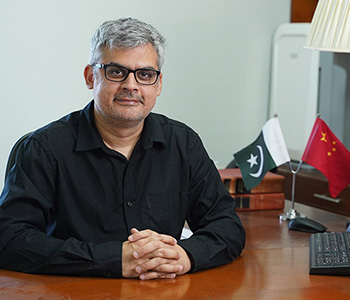
Dr. Sikander Ahmed Shah
A founding member of the Shaikh Ahmad Hassan School of Law (SAHSOL) at LUMS, Dr. Shah holds a B.A. in Economics and a Juris Doctorate (Cum Laude) from the University of Michigan, Ann Arbor, and a PhD from Indiana University Bloomington.
He is the Director of the Centre for Chinese Legal Studies (CCLS) at SAHSOL, overseeing international conferences, academic projects, and research initiatives. Dr. Shah has taught at Temple Law School, Wayne State Law School, the University of Michigan Law School, and as adjunct faculty at the Maurer School of Law, Indiana University Bloomington.
His published works include articles in leading journals like the American Journal of International Law and a book International Law and Drone Strikes in Pakistan (Routledge). His expertise spans Public International Law, International Humanitarian Law, Human Rights Law, Corporate Governance, Refugee Law, Constitutional Rights, and Legal Ethics.
On the policy side, Dr. Shah served as Legal Advisor to the Foreign Minister of Pakistan (2012–13) and has worked extensively on criminal justice reform, child rights protection, and human rights advocacy.

Prof. Uzair Jamil Kayani
Uzair J. Kayani has served as head of the department of Law & Policy at the Shaikh Ahmad Hassan School of Law (SAHSOL), LUMS. He has advised the Government of Pakistan Strategic Policy Planning Cell Working Group on International Investments and Arbitrations. He has been a Board member of the Government of Punjab Public-Private Partnership Authority. He has served as an instructor at the Lahore High Court Research Cell, and on the Lahore High Court Bar Association’s Committee on Teaching, Learning, and Research. He has trained judges at the Punjab Judicial Academy, police officers at the Punjab Police, and medical examiners at public hospitals. He has also been a member of the Government of Punjab Advisory Committee on Environmental Policy.
Professor Kayani has secured research and academic grants from the United States Department of State, the American Bar Association, the British High Commission JSSP through Adam Smith International, the United Nations High Commissioner for Refugees, the International Growth Center, the American Business Forum, and the LUMS Faculty Initiative Fund, among others.
He obtained a Bachelors (Cum Laude) in Political Science from Middlebury College, an M.A in Political Science from Washington University in St. Louis, and a J.D from the University of Chicago Law School. He teaches and researches in the areas of Law and Economics, Common Law, International Law, Business Organizations, and Game Theory.
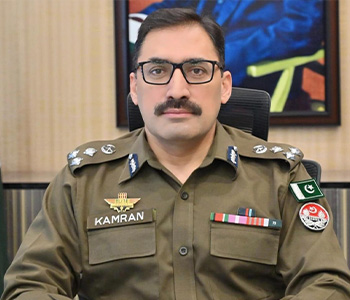
DIG Kamran Adil
Mr. Kamran Adil understands the intricacies of the criminal justice system and is well qualified to advise on criminal law matters including Anti-Terrorism, White- Collar Crime and Anti-Money Laundering Laws. He has more than two decades of experience in the Criminal Law field and has worked with local, state, federal law enforcement agencies and the UN institutions.
Mr. Kamran has worked and served on the following Position: DIG/Training, Punjab Police, DIG/Investigation, Lahore, DIG/Ops, Punjab Police and DIG/HQs, Islamabad Police, AIG/Establishment, Islamabad Police, Sector Commander M-2 South, National Highways and Motorway Police, Islamabad, Acting DIG/Legal (Head of Legal Affairs Division), AIG/Human Rights Cases, SSP Regional Investigation Branch, Multan, SSP Research & Development, Punjab, SSP/Administration, Elite Police Training School, AIG/Career Planning, Punjab, Serving as DIG/Training of the Punjab Police, Additional SP/Kasur, SP/Cantt, Investigation, Lahore, SP/City, Islamabad, ASP/Shahzad Town, ASP/City, ASP/Saddar, Islamabad.
He has also worked as a human resource person for the National Police Academy, Islamabad, the Police College, Sihala, the International Committee of the Red Cross, the Research Society of International Law, the Lahore University of Management Sciences, the International Islamic University, Islamabad. Mr. Kamran extensively writes on international law and publish in national and international journals.

Mr. Asim Zulfiqar Ali
Mr. Asim Zulfiqar is one of the distinguished alumni of PAC and currently serves as the Country Head of Taxation Services at PwC Pakistan. After completing his articles with PwC, his dedication and professional excellence enabled him to rise rapidly through the ranks to become a Partner at the firm.
With extensive experience in taxation, Mr. Zulfiqar provides consultancy to governmental organizations and multinational corporations across diverse sectors. His teaching and professional interests lie in tax law, corporate governance, and financial regulation.

Mr. Ahmed Hassan Khan
Mr. Khan is an Advocate Supreme Court of Pakistan and former Additional Advocate General of Punjab (2015–2017). He is the leading partner at Allied Legal Service and holds an LL.M from Cornell University, USA.
With over 22 years of legal practice, he has worked at prominent law firms, served as Chief Regulatory Officer at the Lahore Stock Exchange, and headed legal departments in the banking sector. His reported judgments include landmark cases in constitutional, civil, and administrative law.
He currently teaches Property Law and Contract Law at SAHSOL and has served on the Punjab Law College Commission (2016–2018) to improve legal education in the province.
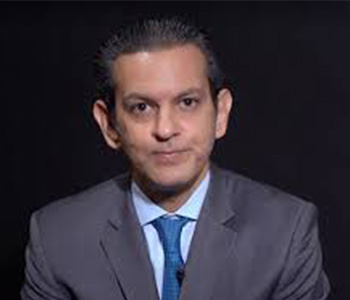
Ali Sultan
Ali Sultan is the Vice President of the Research Society of International Law (RSIL) and previously served as its Executive Director (2012–2016). He is also an international legal advisor and faculty member at LUMS and the Foreign Service Academy.
Recognized for his expertise in Public International Law, Ali Sultan advocates for civic responsibility, fairness, equality, and human rights. His work reflects a strong commitment to the rule of law and its importance in society.

Ms. Samar Masood Soofi
Samar is an Associate Partner at ABS & Co, where she leads the Technology and Intellectual Property Law practice at the firm’s Lahore office. She has over a decade of experience advising clients on corporate, commercial, and regulatory matters, with a focus on intellectual property law, cyberlaw, fintech, and the regulation of emerging technologies.
She teaches courses on Intellectual Property Law and Technology and the Law at LUMS. Samar’s research and practice interests lie at the intersection of law, technology, and innovation policy.
She has advised public and private sector entities including the Ministry of Information and Technology (IGNITE), Electronic Certification Accreditation Council (ECAC), and various multinational corporations on regulatory reforms, digital banking, and intellectual property protection.
Samar holds an LLM from the University of Chicago and an LLB from SOAS, University of London.

Dr. Sheharyar Sikander Hamid
Dr. Hamid has an extensive teaching experience at various higher education establishments in the United Kingdom, Bulgaria, and Pakistan. He earned his PhD from the University of Warwick (UK) with specialization in Corporate Governance, Financial Regulation, and Islamic Finance.
Before joining LUMS, he was Assistant Professor at The University of Warwick, twice nominated for the Warwick Awards of Teaching Excellence (WATC). Between 2012–2019, he held Visiting Assistant Professorial and Lecturer positions at institutions including Birkbeck College, University of London; Brunel University; American University of Bulgaria; Forman Christian College; and University College London.
His teaching and research primarily focus on business law, Islamic finance, corporate finance law, and commercial law. Dr. Hamid is recognized for his adaptive teaching philosophy, contextual scholarly approach, and diverse expertise across different jurisdictions.
He has served as Programme Director of the Islamic Financial Management Development Programme (in partnership with the Bahrain Institute of Banking and Finance), Associate Member of the Centre of Financial and Corporate Integrity, Convener of the Board of Studies at Coventry University, and Director of Legal Clinics (LLM) at the International College of Legal Studies (ICLS).

Dr. Muhammad Azeem
Dr. Azeem is a legal scholar specializing in Pakistani judicial and constitutional history, state theory, labour-based socio-legal research, and international law from a third-world perspective. He places his research in the broader law and development paradigm, looking at structural questions specific to postcolonial societies from marginalized points of view. Dr. Azeem holds an LLB from the University of the Punjab, and an LLM and PhD in Law from Osgoode Hall Law School at York University. His PhD dissertation, which examined the history and development of the liberal legal project in Pakistan, was published by Springer in 2017 as "Law, State, and Inequality in Pakistan."
Dr. Azeem's latest research projects involve labour codes of Global Value Chains, the China-Pakistan Economic Corridor, and judicial activism in Pakistan. His work has appeared in reputable peer-reviewed journals like Third Word Quarterly, Law and Development Review, Comparative Labor Law and Policy Journal, and Oregon Review of International Law. While pursuing his academic work, Azeem continues to be involved in labour and working-class issues. He is also an active member of the Progressive Writers Association, Lahore, and writes poetry and criticism in English, Urdu, and Punjabi.
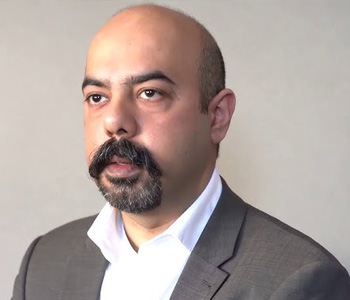
Dr. Raza Saeed
Dr. Raza Saeed is Associate Professor of Law at the University of Warwick and visiting faculty at the Shaikh Ahmad Hassan School of Law (SAHSOL), LUMS. He has also been a Visiting Research Fellow at the Cardiff School of Law and Politics and a Visiting Scholar at the International Institute for the Sociology of Law.
Raza' research interests span across human rights, international law, development and state formation, particularly in the context of developing and postcolonial countries. He has extensive experience of working with international organisations, public sector bodies and academic institutions as a project manager and researcher in the fields of international development, human rights and education. At Warwick Law School, he currently convenes and teaches undergraduate and postgraduate modules on Human Rights Law, International Development and Legal Research. He has also convened and taught courses on Research Methods and Governance & Democratisation.
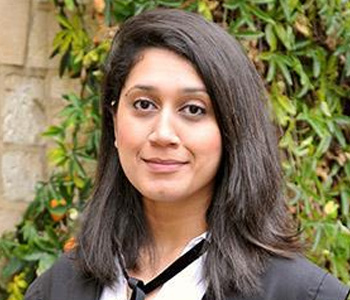
Dr. Aisha Ahmad
Aisha Ahmad is Assistant Professor at the Shaikh Ahmad Hasan School of Law at LUMS. Her research looks at land and urban governance in Lahore, Pakistan and she is interested in interdisciplinary approaches to law, law and development and the political economy of law. Aisha has previously taught courses at LUMS and the University of Oxford relating to law and urban governance, legal reasoning, and core theories and issues in development studies. She will soon be completing her PhD from the Department of International Development at the University of Oxford. Before this, Aisha obtained an MPhil in Development Studies at the University of Oxford, an LLM at Harvard Law School and a BA/LLB from LUMS.


Centre for Chinese Legal Studies
Address
LUMS DHA, Lahore Cantt. 54792,
Lahore, Pakistan
Tel: +92 42 3560 8000 Ext. 5613
Contact Information
CCLS
ccls@lums.edu.pk
Tel: +92 42 3560 8000
Muhammad Asim
muhammadasim@lums.edu.pk
Tel: +92 42 3560 8000 Ext. 8057